
Important medical and commercial notice: Dr. Shape is a postoperative-garment retailer—not a physician, medical practice, healthcare provider or emergency service. This article contains general informational commentary, plain-language summaries of cited third-party sources and product-category information only; nothing in it is a medical opinion from Dr. Shape or individualized medical advice, diagnosis, treatment, a prescription or a recommendation that any product is safe or appropriate for you. Reading this article, contacting Dr. Shape or purchasing a product does not create a physician-patient or other healthcare-provider relationship. Always follow your treating surgeon’s written postoperative plan. If anything here conflicts with that plan, disregard this article and follow the surgeon’s instructions. Do not begin, stop or change a garment, compression level, size, product, placement or wear schedule based on this article. Do not use Dr. Shape content or products to diagnose or treat a symptom or skin condition. Unless your treating surgical team expressly approves the exact item and placement, do not place a garment or accessory directly over an open or unhealed incision, wound, drain, dressing, rash, broken or irritated skin, or an area with new pain, numbness, discoloration or temperature change. Recovery needs and results vary; no medical, healing or cosmetic outcome is promised or guaranteed. Contact your surgical team about questions, symptoms or recovery changes, and seek prompt medical or emergency care when appropriate.
The direct answer is: wear only the wrap, bandage, chin/jaw garment, neck garment or ordinary clothing specified by your treating surgeon after chin liposuction. There is no universal chin-lipo compression garment, pressure or timeline.
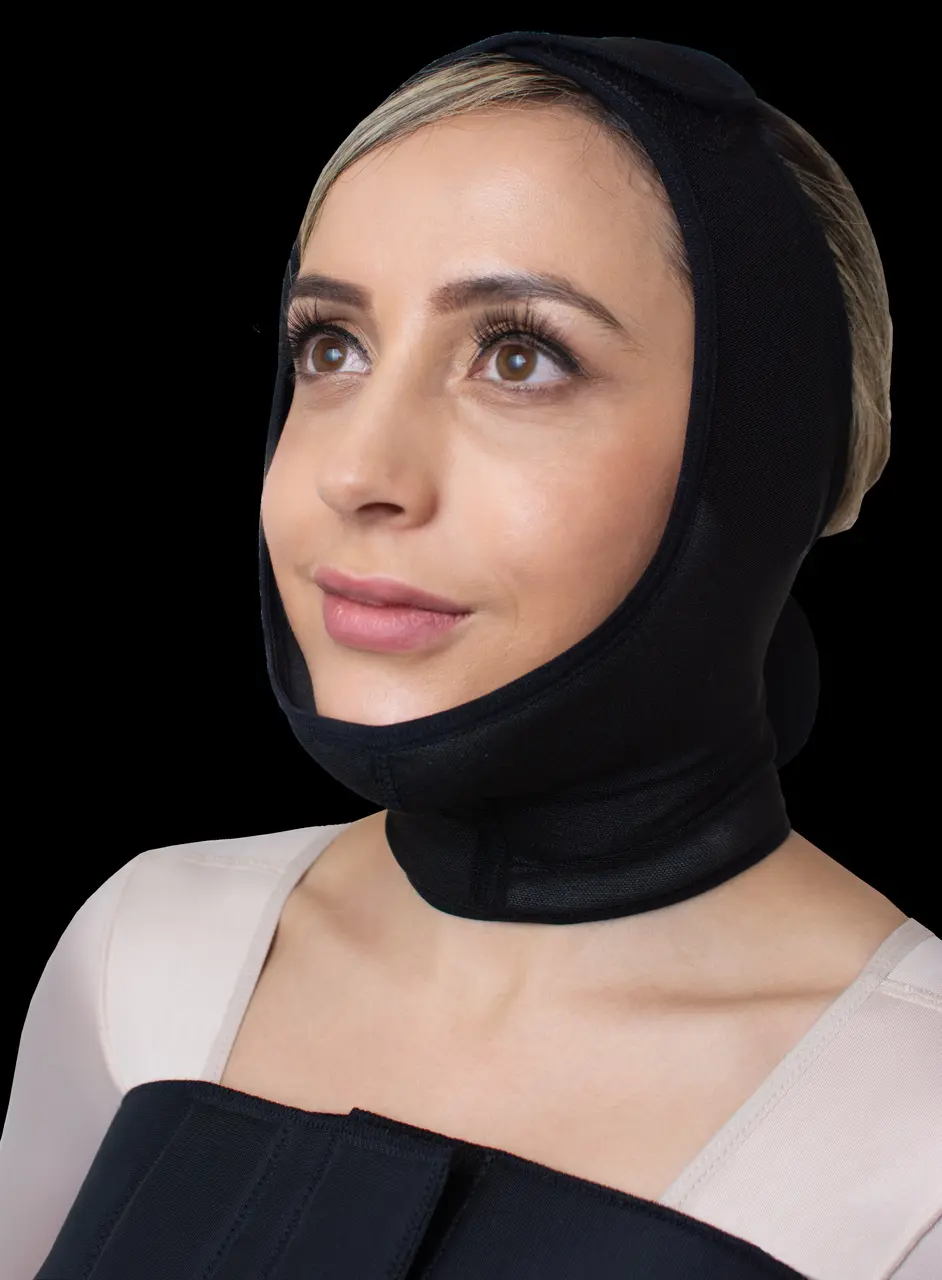
Ask the surgical team to define the treated area, approved coverage, incision and bandage restrictions, edge and closure positions, daily and overnight hours, removal instructions and follow-up date. Then compare product construction with those written specifications.
What “chin liposuction” means for garment questions
Chin liposuction—also called submental liposuction—uses liposuction in the area beneath the chin. The exact treated boundary and incision sites depend on the procedure. Some people also have a neck lift, chin implant, facelift or another procedure, but those operations are not interchangeable.
The American Society of Plastic Surgeons’ liposuction recovery guidance says dressings or bandages are applied to incisions and that an elastic bandage, support bra or compression garment may be used. It tells patients to obtain individual instructions about the surgical site, bandages, pressure-garment duration, activity and follow-up.
That source does not prescribe a particular chin garment. It establishes the right sequence: procedure-specific clinical instructions first, product comparison second.
Chin liposuction is not the same as a chin implant or neck lift
A chin implant involves different operative work and may use different incisions, bandages and restrictions. A neck lift can include incisions around the ear, in the hairline or under the chin. ASPS neck-lift procedure information describes those possible approaches.
If more than one procedure was performed, ask the surgeon to map the garment requirements for each. Do not use a chin-liposuction article to choose compression after an implant or neck lift. Do not assume a longer panel is appropriate because the neck was also treated.
Map the approved chin, jaw and neck coverage
Face garments vary widely. A narrow sling may cradle the chin. A wider panel may extend along the jaw. A longer design may reach down the neck. Product photos do not show how the item will align with an individual person’s anatomy.
Ask the team to mark:
- The front and back limits of the treated area
- Whether both sides of the jaw require the same coverage
- How far under the chin and down the neck a panel may extend
- Areas that must remain uncovered
- Where every edge may sit
- Where straps may cross the head or neck
If the garment shifts away from the approved map, contact the surgical team about placement. Do not compensate by tightening straps without instruction.
Incisions and bandages come before product placement
Even small liposuction incisions require individualized care. A garment edge, seam or closure can approach an incision or bandage when the product is not positioned exactly as expected.
Have the surgical team demonstrate:
- Whether the garment may touch or cover each bandage
- Where openings and closures should sit relative to incisions
- How the item is removed for approved wound care
- What changes when a bandage is removed or replaced
- When the fit and placement will be reassessed
Do not move a dressing, place retail padding underneath or wear a garment directly over an open or unhealed site unless the treating team expressly directs it.
Ear openings, straps and closures
An ear opening may help locate a chin garment, but it can also pull or misalign if the panel size does not match the user. Straps may travel over the crown, behind the head or around the neck. Closures may sit near the ear, hairline or back of the neck.
Compare:
- Opening dimensions and edge finish
- Whether the ear can remain in the instructed position
- Crown and rear strap length
- Hook-and-loop or other closure surfaces
- Ability to reopen and refasten without twisting the panel
- Compatibility with glasses, hearing devices or other necessary equipment
An adjustable strap does not make every pressure setting acceptable. Only the treating team can specify postoperative pressure.
Bandage, wrap and removable garment are different items
Your postoperative instructions may mention a bandage placed at the facility, a wrap supplied by the practice or a removable retail garment. Confirm which item each instruction describes.
Do not replace a surgeon-applied bandage with a retail garment. Do not place a new product over it unless the plan expressly says to. Ask whether the item changes after the first visit and whether the old one should be discontinued, cleaned or kept.
Fit is more than “tight” or “loose”
A useful fit instruction identifies observable placement rather than relying only on sensation. Ask how the approved garment should align, whether a finger check or another method is appropriate and which findings require a call.
Watch only as instructed for:
- Rolling or folding at the jaw or neck
- A narrow line of concentrated pressure
- Ear pulling
- Uneven or one-sided coverage
- Gaps over an area intended to be covered
- A strap or closure moving toward an incision
- Wet, soiled, stretched or damaged material
Do not deliberately choose a smaller item for stronger compression. Do not add a second garment or extra layer to correct fit unless the surgical team approves the exact combination.
Wear time must come from the treating surgeon
ASPS tells liposuction patients to ask how long a pressure garment should be worn. It does not set one chin-liposuction duration for everyone. Daily hours, overnight use and total duration are separate parts of the plan.
Ask:
- How many hours per day is the approved item worn now?
- Is overnight use different?
- When may it be removed for bathing, wound care, skin checks or laundry?
- Does the schedule change at a follow-up visit?
- Does use stop, taper or transition to another item?
- What should happen if the item becomes wet or cannot be refastened as instructed?
Do not use “one to two weeks,” “until swelling is gone” or another person’s routine as your clearance.
Swelling changes require communication, not self-adjustment
ASPS neck-lift results information notes that swelling after that distinct procedure can take time to dissipate and emphasizes following the plastic surgeon’s instructions. Chin liposuction has its own course, and appearance alone cannot show whether a change is expected.
Do not tighten the garment because swelling appears greater or stop because it appears lower. Record changes as instructed and contact the surgical team according to the discharge plan.
What the evidence does not support
A 2023 peer-reviewed review of postoperative compression garments found that evidence varies by procedure and outcome. The authors also discussed possible adverse effects including discomfort and skin injury. The review does not establish that a chin garment prevents complications, guarantees smooth contours or improves final results for every person.
Avoid product claims about forcing skin to “reattach,” draining fluid, improving circulation, accelerating healing or protecting a result unless a qualified clinician makes a case-specific judgment. A retailer should not promise those outcomes.
Shopping after the surgeon approves a garment category
The broader guide What Is a Face Compression Garment? compares chin, jaw and neck coverage, straps, ear openings, seams and closures. The timing guide How Long Should You Wear Face Compression After a Facelift? explains why schedules cannot be transferred between facial procedures.
For a surgeon-approved product category, shoppers can review the Dr. Shape post-surgical face compression garment. Confirm the actual panel dimensions, strap range, materials, care directions, availability and return terms. The product is sold as an adjustable one-size design, but that label does not prove anatomical fit or medical suitability.
Commercial disclosure: Dr. Shape sells products and collections linked in this article and may receive revenue from purchases. Product links are provided for shopping convenience and do not mean that a product is medically appropriate for a particular reader, procedure or recovery plan.
Questions to ask before buying
- Is a removable retail garment part of my postoperative plan?
- What exact chin, jaw and neck areas should it cover?
- What pressure or adjustment instruction should I follow?
- Where may the ear openings, straps, seams, edges and closure sit?
- How should it interact with each incision and bandage?
- How many hours per day and overnight should I wear it?
- When and how may I remove it?
- What date or finding triggers reassessment?
- Which fit or skin observations require a call?
Bring the product information to the surgeon if the team wants to review it. Do not ask the retailer to approve postoperative placement.
When to contact the surgical team
Follow the practice’s own instructions. Seek prompt guidance for new or worsening pain, persistent numbness, marked skin-color or temperature change, rapidly changing or one-sided swelling, blistering or broken skin, drainage concerns, breathing difficulty, a garment interfering with an incision or bandage, or another concerning change.
Do not use tightening, loosening or removing the garment as treatment unless the clinical team directs that response. Use emergency services for potentially life-threatening symptoms or as instructed by the practice.
Frequently asked questions
Do I need a chin compression garment after chin liposuction?
Only the treating surgeon can decide whether a bandage, wrap or removable garment is part of your plan. Not every patient or procedure uses the same item.
How long should I wear it each day?
Obtain daily hours, overnight directions, permitted removal, total duration and reassessment timing in writing. There is no universal schedule.
Should a chin garment cover the neck?
Only if the surgeon approves that coverage for the exact treated area and incision map. Chin, jaw and neck panels are not interchangeable.
Can I use the same garment after a neck lift or chin implant?
Do not assume so. Those are different procedures with different possible incisions, dressings, pressure instructions and schedules.
What if the garment pulls on my ears?
Contact the surgical team about postoperative placement and the retailer about product dimensions. Do not cut the ear opening, add padding or tighten another strap without approval.
Can tighter compression improve my results?
No general evidence or product label supports deliberately increasing pressure for a better result. Use only the pressure and adjustment prescribed by the treating team.
The practical takeaway
What you wear after chin liposuction should come from an individualized written plan. Distinguish chin liposuction from implants and neck lifts; map the chin, jaw and neck; protect incisions and bandages; compare ear openings, straps and closures; and ask for exact wear and reassessment instructions. No garment can guarantee healing or a cosmetic result.
Medical-information reminder: This article is general informational commentary and product-category education—not a Dr. Shape medical opinion, individualized medical advice, diagnosis, treatment or emergency guidance. Dr. Shape is a retailer; publishing content, answering product questions or selling a product does not create a physician-patient relationship. Your treating surgeon’s written postoperative plan overrides every general statement here. Do not rely on this article to make postoperative-care decisions, treat a symptom or skin condition, place a product over an incision, wound or irritated skin, or delay contacting a qualified healthcare professional. Individual experiences and outcomes vary; Dr. Shape does not guarantee any medical, healing or cosmetic result.
Sources
- American Society of Plastic Surgeons. Liposuction Recovery
- American Society of Plastic Surgeons. Neck Lift Procedure Steps
- American Society of Plastic Surgeons. Neck Lift Results
- Ormseth BH, Livermore NR, Schoenbrunner AR, Janis JE. The Use of Postoperative Compression Garments in Plastic Surgery—Necessary or Not? A Practical Review. 2023.